Let’s be real: no one actually enjoys taking meeting notes. You sit there trying to listen, type frantically, miss the next three things your boss just said, and end up with a messy doc you still have to clean up later. Then someone asks “what were the action items again?” and you want to throw your laptop out the window.
That’s where Meetly slides in. It does the one thing every team needs but hates doing: turning a chaotic 45-minute call into clean, readable notes — transcripts, summaries, action items, all of it. And pros who have tried a dozen similar tools are genuinely hyped about this one. So what’s the deal?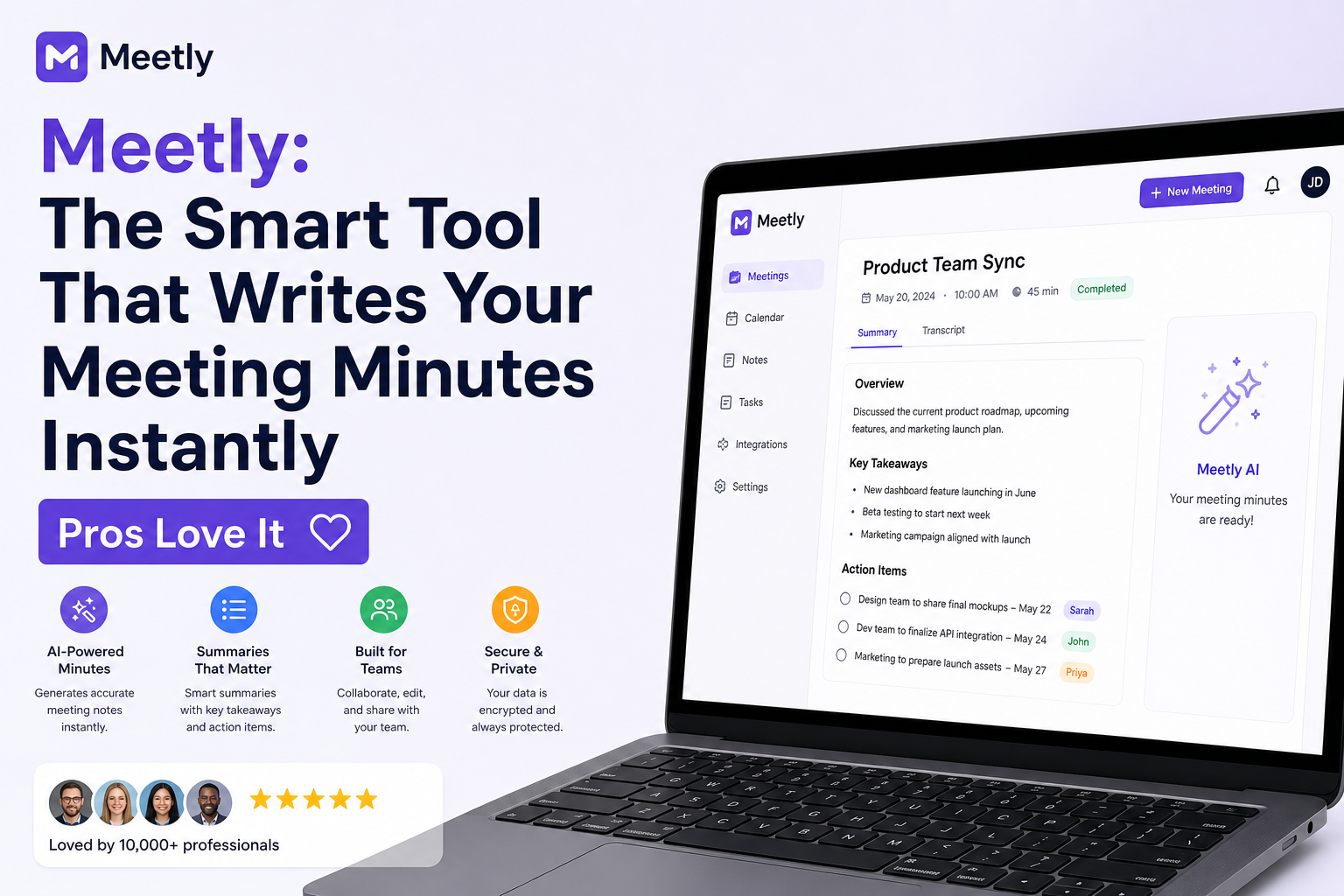
Meetly doesn’t just record — it actually understands the flow
Most transcription tools just vomit words at you. Meetly, on the other hand, picks up who said what, highlights key points, and extracts follow-ups without making you dig through a wall of text. I tested it on a typical product sync where three people talked over each other for 20 minutes, and the summary came out surprisingly coherent — it even caught the one deadline everyone almost forgot.
If you’ve ever used Otter or Fireflies, you’ll notice the difference quickly. Meetly feels less “robotic transcript” and more “someone who was actually paying attention.” The summaries aren’t generic either. They actually reflect the discussion, not just a bullet list of “talked about roadmap.”
Real scenarios where it just clicks
Scenario one: You’re a PM with six back-to-back client calls. Before Meetly, you’d spend another hour after each call rewriting messy notes. Now you just let it run, skim the summary, copy the action items into your task board. Done.
Scenario two: Remote team with members in different time zones. One person misses the standup, and instead of a vague Slack recap, they get a full transcript plus a neat “next steps” list. No more “can someone summarize what I missed?”
Scenario three: You’re in a brainstorming session where ideas fly fast. Meetly tags each speaker — so later, when someone says “wait, who suggested the redesign?”, you can trace it back instantly. That alone saves the awkward silence.
The honest tradeoffs you need to know
Okay, it’s not flawless. Like any AI transcription tool, it struggles with heavy accents or very low audio quality. If your team is all talking over each other in a noisy coffee shop, don’t expect magic. And the speaker labeling isn’t perfect — it sometimes confuses two similar voices. Pretty standard stuff for this tech, but worth noting.
Another thing: If you only take notes to have a personal archive and never actually refer back to them, you might not need this. But if your meetings produce real decisions and tasks that someone needs to track, Meetly saves way more time than it costs.
Also, privacy. Meetly stores your data, and if your company has strict compliance requirements (like legal or healthcare), you’ll want to check their security page before jumping in. For most startups and mid-sized teams though, it’s fine.
Who actually gets the most value?
Honestly? Anyone who sits in more than five meetings a week and is tired of being the “note person.” Product managers, team leads, designers in endless reviews — these are the people who light up after using it. But if you’re someone who prefers handwritten notes or minimalist systems, the tool might feel like overkill.
Compared to other options, Meetly is simpler to set up and the output feels cleaner out of the box. You don’t need to fiddle with templates or training the AI. It just works. That alone is rare.
If you’re already in the “I hate taking notes but I have to” camp, try Meetly Notes for a week. Chances are, you’ll wonder how you survived without it.
Comments
Leave a Comment