A couple of weeks ago, I sat through a 45-minute product review call. By the time we wrapped, I had three scribbled notes in my notebook that read like cryptic crossword clues. "API thing — check with Sarah." "Next sprint — maybe?" "Budget? ask later." That was it.
I spent the next morning following up with three different people to reconstruct what actually happened. Nobody remembered exactly who volunteered to revise the onboarding flow. The developer said he only agreed to "look at it," not to build it. Classic.
This is the meeting problem nobody talks about enough. It's not that people don't pay attention — it's that your brain can't listen, process, and write down every important thing at the same time. Something drops. Usually the thing you discover you needed three days later.
That's why I started testing Meetly. The pitch is simple: join your meeting, let it listen, and walk away with a transcript and a clean summary of who said what and what comes next. No manual notes required.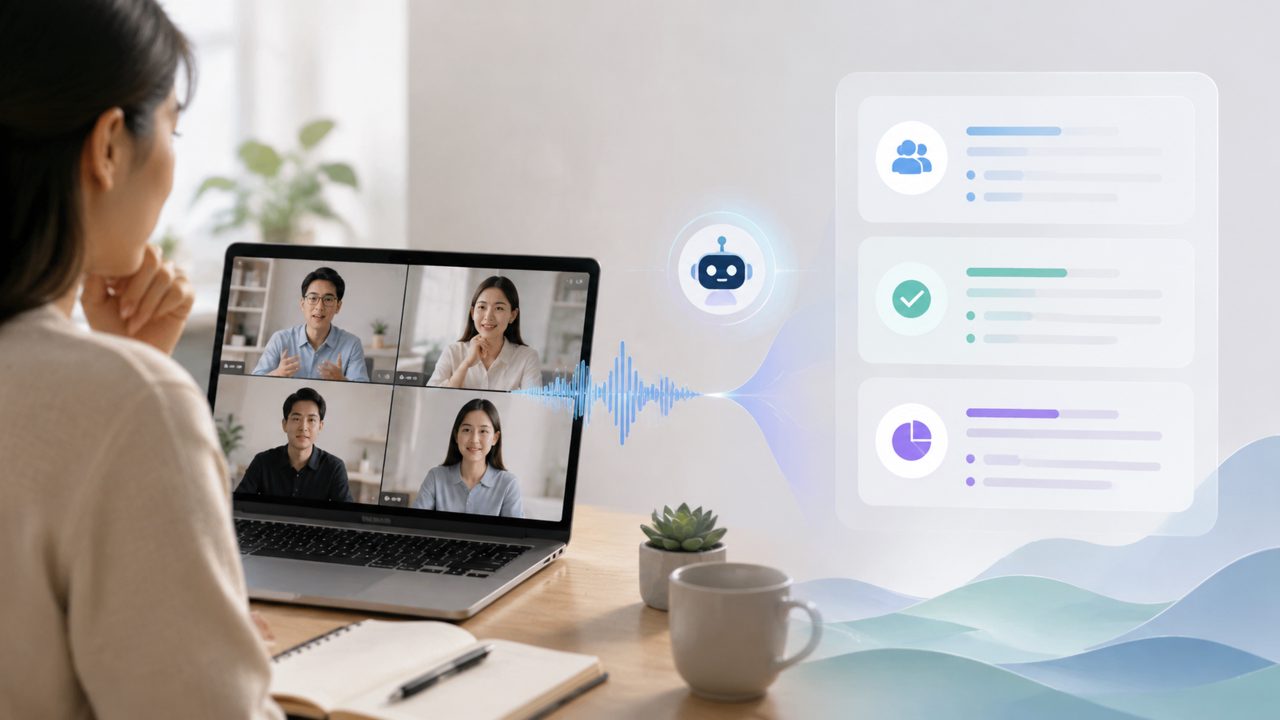
What it actually does in a real call
I tried it on a typical Tuesday — two customer calls back to back, then an internal standup. Meetly sits in the background and transcribes the entire thing. When the meeting ends, you get a page with three main things: the full transcript (searchable), a summary of key points, and a list of action items with names if people explicitly agreed to do something.
Honestly, the action item list was the most useful part. On the customer call, someone from support said "I'll draft the migration guide by Friday." Meetly captured that sentence and put it in the follow-ups section. Without anyone having to write it down or assign a task manually. That's the kind of thing you'd normally catch only if you were taking notes at that exact second — which you usually aren't, because you're listening or talking.
I also like that the summaries aren't verbose. They don't try to re-narrate the entire meeting. It's more like: "Discussed pricing tier changes. Agreed to delay rollout by two weeks. Action items: [name] to update proposal, [name] to confirm timeline." Short enough to scan before your next meeting.
One scenario where it saved me
Last week I had a cross-team sync where three people talked over each other for about ten minutes debating a naming convention. I zoned out for a bit because honestly, I didn't care that much about the naming at the time. Later, it turned out that naming decision affected a doc I had to write. I opened the Meetly transcript, searched for the term we were debating, and found the exact moment someone said "we're going with UserProfileV2, not customer_profile_new." Done. I didn't have to ask anyone or re-read a messy chat log.
Where you might hesitate
There are limitations worth mentioning. If your team speaks in heavy jargon or acronyms specific to your company, the transcription isn't perfect — I've seen "CRM" turned into "seer um" before. Not a big deal in context, but if you share a transcript externally, you might want to glance at it first.
Also, the summaries depend on how clearly people express decisions. If your teammate says "I guess we could maybe consider looking at that next week sometime," don't expect Meetly to turn that into a firm action item. It captures language as spoken — which is honest, but means messy conversations produce messy outputs. The tool works best when someone on the call says clear things like "I'll handle the deployment script" or "We decided to go with option B."
Privacy-wise, Meetly records and processes the audio. That's fine for most internal calls, but if you're in a highly regulated industry or talking about sensitive legal matters, you'll want to check with whoever manages your compliance. Some teams prefer to record manually and upload later rather than letting the bot join live. That works too.
Who it actually fits
In my experience, Meetly makes sense if you have regular meetings where things get decided but nobody writes them down. Marketing handoffs, sprint planning, client check-ins — those are sweet spots. It's less useful for purely social catch-ups or brainstorming sessions where the goal is free-flowing ideas without structure. You don't need a summary of someone venting about their inbox.
If your team already has a strong note-taking culture where someone writes down every action point and shares it, Meetly might feel redundant. But if you're like me — someone who leaves meetings with messy scribbles and a fuzzy memory of who promised what — it fills a real gap. I still follow up manually when something looks unclear. But I do it a lot less now.
Comments
Leave a Comment