Let’s be honest: very few people wake up excited about taking meeting notes. You’re trying to follow a discussion, remember who said what, and somehow capture action items — all while the conversation moves faster than your fingers. The result? Half-baked notes, missed tasks, and a growing sense that meetings are just a tax on your real work.
Meetly tries to fix that — not by promising to eliminate meetings, but by making the record-keeping part vanish. It listens to your conversations, then spits out clean notes, full transcripts, and summaries. No one has to volunteer as the note-taker anymore. The product claims to turn every team call into a searchable, shareable document without anyone lifting a finger. Does it make work fun again? Maybe not fun, but definitely less annoying.
Three scenarios where Meetly actually helps
1. The chaotic brainstorming call. Four people, a whiteboard in Jira, and good ideas flying everywhere. You don’t want to pause to jot down “Sarah suggested using micro-frontends” — you want to keep the momentum. After the call, Meetly gives you a summary that actually separates decisions from open questions. No more “did we even agree on that?” Slack messages later.
2. The recurring weekly sync. Same ten people, same status updates, yet someone always forgets to assign next week’s action items. With Meetly, the transcript tags speakers, so you can see exactly who promised what. You end each meeting with a clean list of owners and deadlines — without reviewing an hour of audio.
3. The cross-team handoff. Engineering talks to product talks to marketing. There’s always ambiguity about what was actually decided. A transcript with timestamps lets everyone rewind to the exact moment a requirement changed. It’s not just a record; it’s a source of truth that stops “he said, she said” before it starts.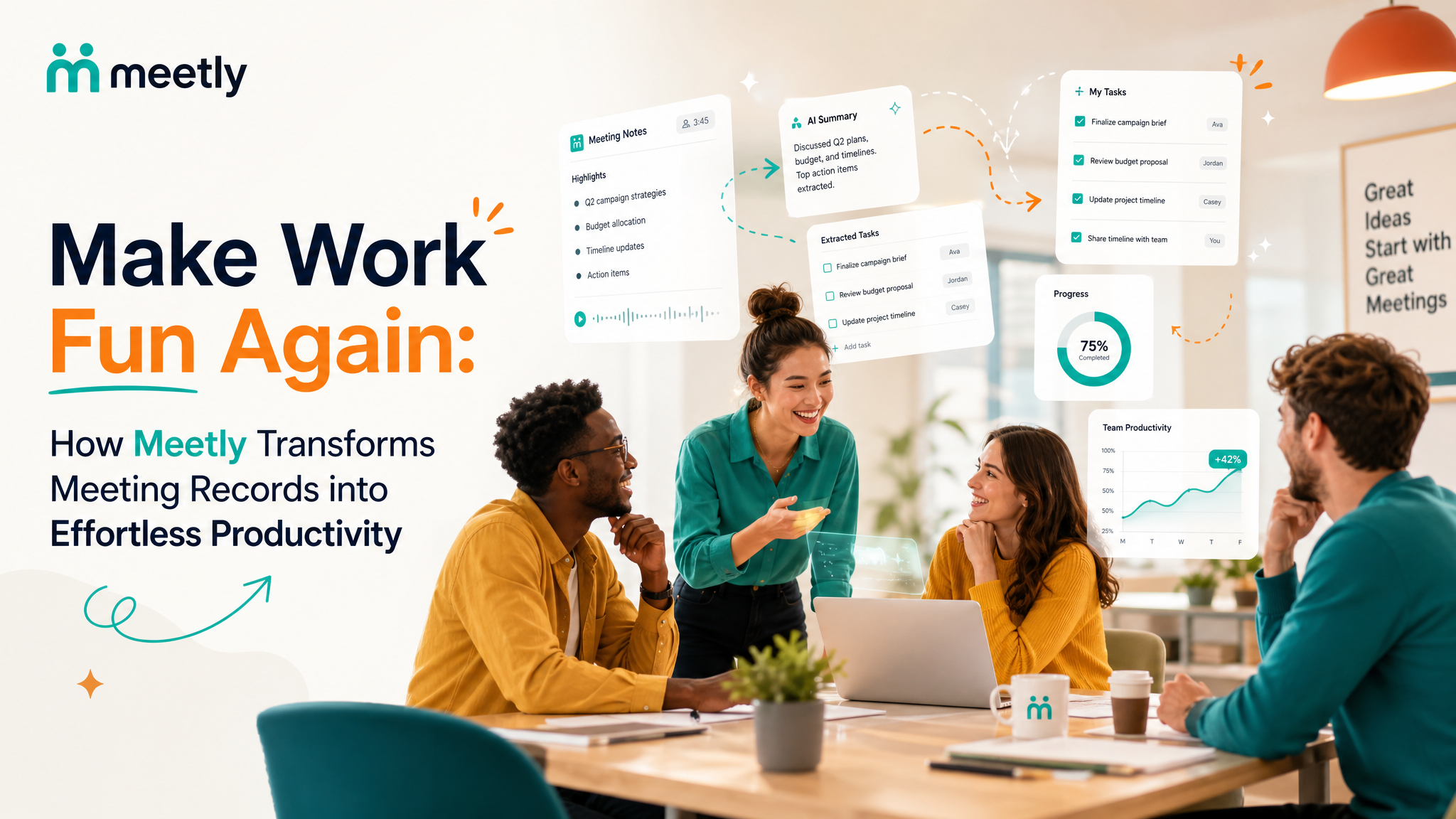
The tradeoffs you should know about
Meetly works well when everyone speaks clearly and the conversation is structured enough to follow. But if your team talks over each other — or if you have heavy accents in a non-ideal audio environment — the transcription accuracy dips. You’ll still get the gist, but you may need to correct a few names or technical terms. It’s also not a replacement for active participation. Skimming a summary isn’t the same as being present; meetings still need attentive humans to make decisions. The tool handles the memory, not the judgment.
Another thing: if your meetings are very long (think 90-minute workshops), the summaries can be too compressed. You might prefer the full transcript, which can be overwhelming. Meetly lets you switch between views, so it’s a matter of personal workflow. Not every team will find it a perfect fit — but the flexibility is there.
Is it worth trying?
If you’re tired of the note-taking overhead, Meetly removes that friction almost completely. It doesn’t make meetings fun — nothing truly can — but it makes the aftermath feel effortless. Start with one team and one recurring meeting. The real test is whether you stop dreading the “can someone share the notes?” question. For many teams, that small change alone is worth the switch.
Comments
Leave a Comment